
Login

Transform Your Onboarding Experience with UKG Ready Partner

What Makes UKG Ready Onboarding Stand Out — Features That Drive HR Results

First impressions matter — and onboarding sets the tone for how quickly new hires contribute. UKG Ready Onboarding speeds that transition with automated workflows, role-based personalization, and integrated HR data flows. This article outlines what UKG Ready Onboarding does, how it fits inside a modern HCM stack, and why HR teams focus on faster time-to-productivity, tighter compliance, and stronger new-hire engagement. You’ll get a clear view of core capabilities — pre-boarding portals, configurable checklists, manager visibility, mobile access, and integrations — plus practical setup and measurement approaches that support retention. Many organizations struggle with scattered onboarding that causes delays, errors, and poor candidate experiences. The solution is a coordinated onboarding system that enforces tasks, syncs data to payroll and HR systems, and prompts managers at the right moments. Below we match features to outcomes, explain compliance and integration mechanics, and show how a UKG Ready partner can implement and optimize the solution to maximize ROI.

What Are the Core Features of UKG Ready Onboarding That Enhance New Hire Integration?

UKG Ready Onboarding brings early employee touchpoints under one workflow: a pre-boarding portal, configurable checklists, manager dashboards, mobile access, and integrations. Together these reduce manual work and speed ramp-up. The platform assigns tasks automatically and uses conditional logic to surface only relevant items by role and location, which improves completion rates and cuts errors. Those capabilities produce measurable gains: lower administrative hours, more accurate first pay, and a consistent, branded experience for new hires. Knowing these core elements helps you prioritize configuration and measure onboarding’s impact on retention and compliance.

The platform’s top features and one-line benefits are:

  • Pre-boarding portal: Delivers a personalized welcome and the right resources so new hires start confident and prepared.
  • Onboarding checklists: Automates role-specific tasks so required forms and training finish on schedule.
  • Manager dashboards: Gives managers a clear view of progress so they can coach and approve on time.
  • Mobile access: Lets hires complete forms and communicate from any device, speeding turnaround for remote and hourly staff.
  • Integrations: Syncs data with payroll, ATS, and LMS systems to cut duplicate entry and boost accuracy.

Combined, these elements produce a consistent journey from offer acceptance to day one. Mapping each feature to outcomes clarifies where to invest in automation and configuration.

Introductory comparison of features and delivered value:

FeatureCharacteristicDirect Value
Pre-boarding portalRole-specific content and early system accessQuicker first-day productivity and stronger engagement
Onboarding checklistsConditional tasks and automated remindersFewer missed steps and consistent compliance
Manager dashboardsReal-time status and alertsFocused coaching and faster issue resolution

How Does the UKG Ready Pre-boarding Portal Personalize the Employee Experience?

The UKG Ready pre-boarding portal tailors onboarding by delivering targeted messages, role-specific documents, and early access to systems before day one. Conditional workflows show only relevant materials — a branded welcome packet, manager videos, role-based training links, or location-specific checklist items — so new hires arrive less anxious and better prepared. Typical personalization includes welcome videos, direct manager notes, resource libraries, and links to required systems. Paired with reminders and mobile access, pre-boarding shortens time-to-completion and cuts administrative follow-ups.

The portal’s flow — content → personalization rule → action — links data and experience so engagement metrics like pre-start checklist completion and time-to-first-task are easy to measure.

In What Ways Do Onboarding Checklists Streamline New Hire Tasks and Compliance?
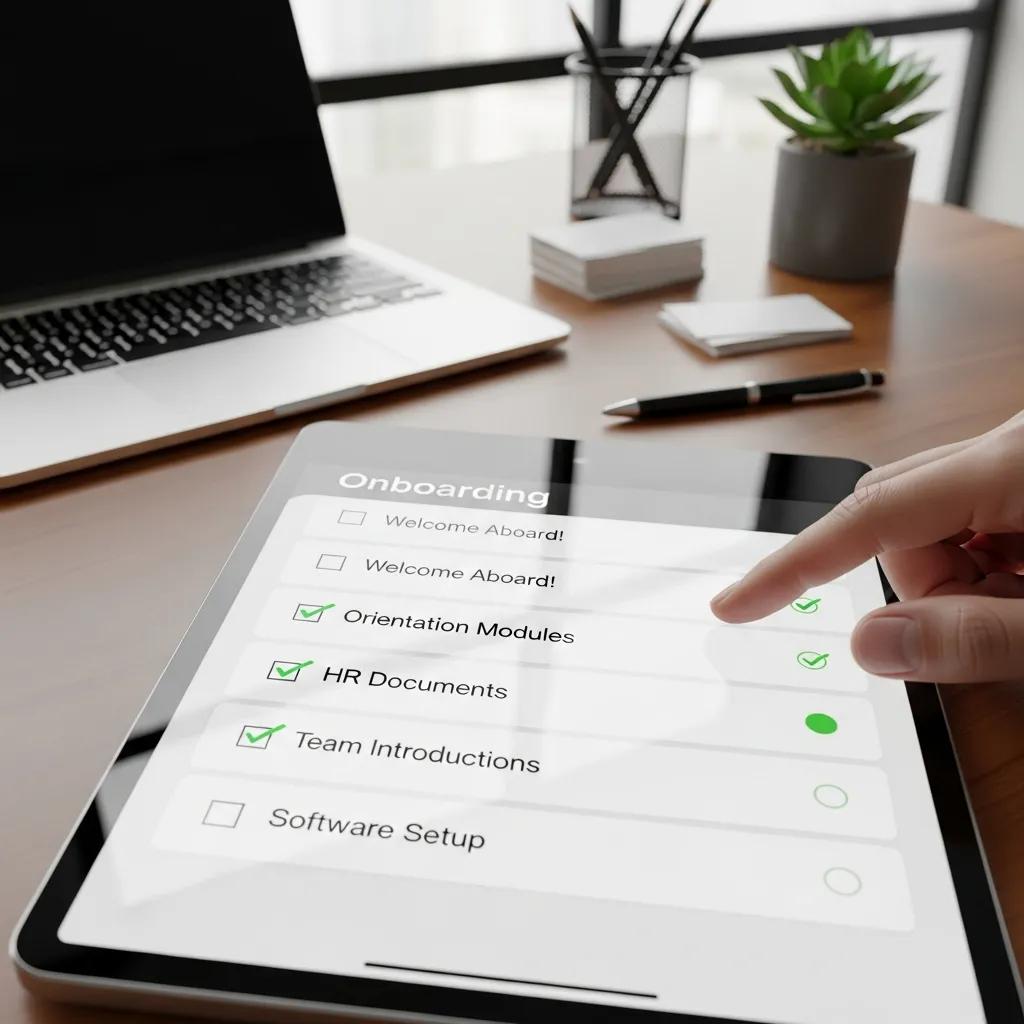
close up of a digital onboarding checklist on a tablet in a modern workspace highlighting efficiency in new hire tasks 9e8b404f 125d 4383 847b 133ab0ced848

Onboarding checklists break the new-hire journey into role- and location-specific steps, trigger reminders, and track completion so compliance items aren’t missed. Conditional logic includes or excludes tasks — tax paperwork, equipment requests, mandatory training — based on hire attributes, reducing manual errors and follow-up work. Progress tracking gives transparency to HR, managers, and employees, while escalation rules surface overdue items to the right stakeholders. Integrating electronic forms with checklist steps replaces paper trails and stores completed documents securely, simplifying audits and cutting the time HR spends chasing paperwork.

When automated onboarding is implemented strategically, organizations see efficiency gains across teams and roles.

Employee Onboarding Automation for HR Efficiency

Automating onboarding tasks for new and existing employees — and coordinating HR, hiring managers, and IT — speeds processes, reduces human error, and frees HR to focus on higher-value work like new-hire integration and talent development.

Practical examples include automatic assignment of I-9 or tax forms for U.S. hires and auto-enrollment for role-based certifications; these automations shorten cycles and preserve audit trails for compliance.

Onboarding ComponentMechanismOutcome
ChecklistsConditional tasks, remindersHigher completion rates and fewer late items
Electronic formsSecure capture and storageFewer manual errors and audit readiness
NotificationsEscalations and alertsFaster resolution of overdue tasks

How Does UKG Ready Onboarding Improve Employee Engagement and Retention?

UKG Ready Onboarding boosts engagement and retention by delivering clear, structured experiences, early access to role resources, and manager-led support. The platform emphasizes consistent, personalized communication and timely manager involvement — the combination builds clarity, belonging, and early performance momentum. Organizations that use structured workflows typically see faster time-to-productivity and improved first-year retention because new hires get clear expectations, prompt feedback, and relevant training. Trackable outcomes come from onboarding milestone completion, early performance indicators, and new-hire survey responses.

A focused list of retention-driving outcomes:

  • Faster Time-to-Productivity: Role-specific training and early system access shorten ramp time.
  • Stronger Cultural Fit: Personalized onboarding communicates values and role expectations clearly.
  • Improved Manager Support: Dashboards and alerts enable timely check-ins and coaching.
  • Higher Compliance Confidence: Automated documentation reduces administrative friction and builds trust.

When new hires feel prepared and supported, they’re more likely to stay and perform — making onboarding a powerful retention lever.

What Role Does Manager and Mentor Visibility Play in Supporting New Employees?

Visibility for managers and mentors is critical. Dashboards surface onboarding status, task completion, and early performance signals so managers can step in with targeted coaching or resources. UKG Ready shows who’s on track, which forms are outstanding, and what approvals are pending — enabling timely check-ins during the first 90 days. Mentor programs tied to checklist milestones speed social integration and hands-on learning, while feedback tools capture insights to improve the program. Giving managers actionable data instead of anecdotal signals reduces the risk that new hires fall through process gaps.

This manager-centered loop — status dashboard informs manager actions — improves individual outcomes and program-level metrics like completion and early performance.

How Does Mobile Accessibility Enhance the Onboarding Experience for Modern Workforces?
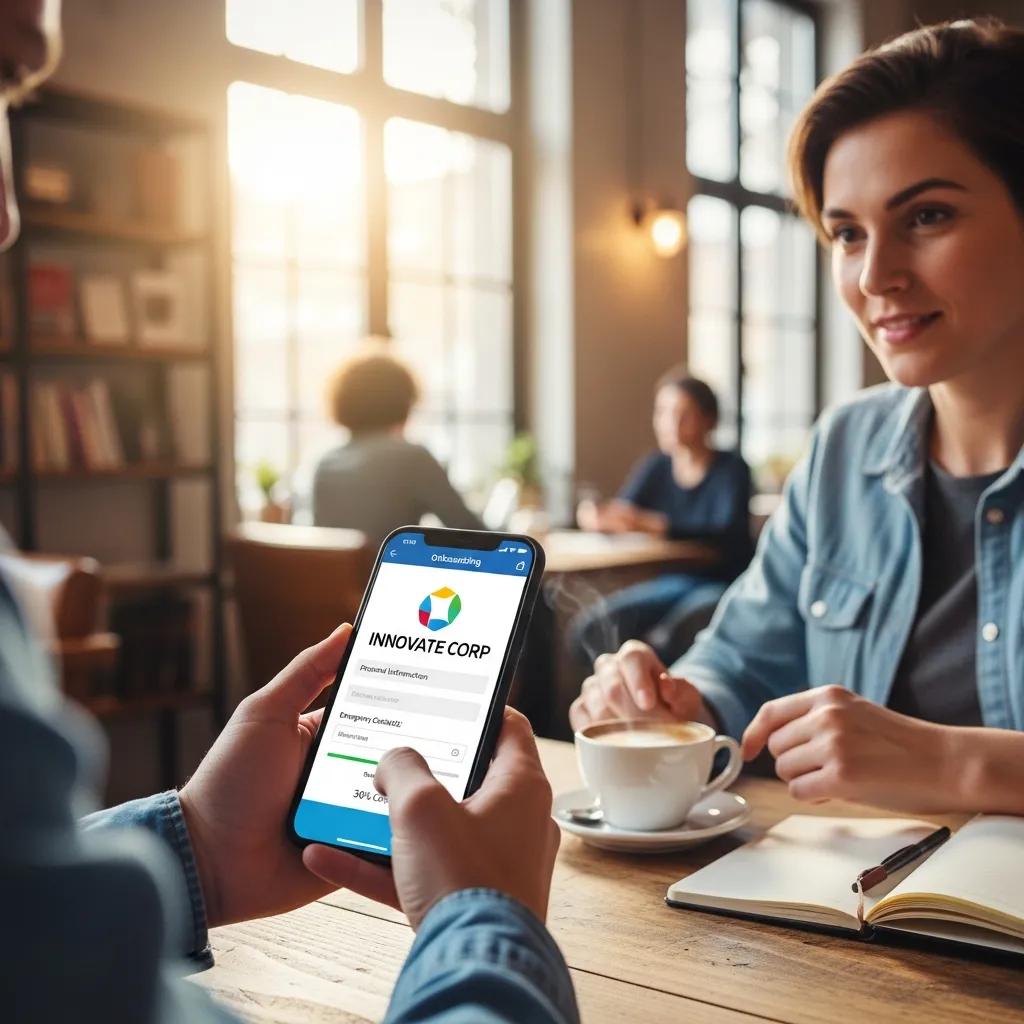
new hire using a smartphone to complete onboarding tasks in a casual setting showcasing mobile accessibility db80fc7e 65dd 48a4 a512 847f1adb8001

Mobile access lets new hires — especially remote and hourly workers — complete tasks, sign forms, and message managers from any device. Features like responsive electronic forms, checklist progress, push notifications, and secure uploads remove barriers for non-desk employees and shorten turnaround. Mobile completion reduces scheduling conflicts and speeds document return, helping organizations meet payroll and compliance deadlines without manual chasing.

Because work is increasingly distributed, mobile onboarding enables anywhere task completion, which speeds overall onboarding and lowers friction in the pre-start and first-day windows.

Why Choose Axiom Human Resource Solutions for UKG Ready Onboarding Implementation?

The right implementation partner makes the difference. Proper configuration, role mapping, and change management determine whether UKG Ready delivers promised efficiency and engagement gains. Axiom Human Resource Solutions is a UKG Ready Partner with implementation experience that aligns the product to your operations — checklist design, conditional workflows, and manager enablement. Our approach is people-centered and performance-driven, with white-glove support that smooths deployment and accelerates adoption. If you need help, Axiom can build role-specific templates, train managers, and set up reporting tied to business goals.

Our implementation path typically follows discovery, configuration, testing, and training so teams go live with operational readiness and measurable targets. To see the platform or discuss tailored implementation timelines, request a demo with Axiom.

What Expert Services Does Axiom Provide to Tailor UKG Ready Onboarding?

Axiom starts with discovery and requirements mapping to capture role structures, compliance needs, and integration points, then moves into configuration and user acceptance testing to validate workflows. We build role-specific onboarding checklists, configure pre-boarding content, and set up manager dashboards so the solution mirrors real-world processes. Training and go-live support ensure managers and HR adopt new workflows confidently, and documented runbooks sustain consistent execution. These steps reduce time-to-value and limit post-launch rework by aligning the system to your operations.

This roadmap — discovery defines configuration scope — creates repeatable outcomes that lower deployment risk and speed benefits realization.

How Does Axiom Offer Ongoing Support and Optimization for UKG Ready Users?

After go-live, Axiom provides help-desk support, scheduled configuration reviews, and optimization work focused on automation tuning, reporting improvements, and adoption monitoring. Our support model offers tiered troubleshooting, periodic reviews to find automation opportunities, and KPI recommendations that reveal adoption gaps. Continuous improvement typically includes reviewing onboarding completion metrics, refining conditional logic, and updating training materials. Ongoing engagement helps organizations maintain momentum and adapt processes as headcount, regulations, and business needs change.

Combining technical support with periodic optimization helps clients sustain a people-centered onboarding experience while extracting ongoing performance gains from their UKG Ready investment.

Integration TypeBenefitBusiness Outcome
Payroll syncAutomated employee data transferMore accurate first pay and fewer corrections
ATS handoffCandidate-to-employee data continuityShorter hire-to-onboard cycle and less duplicate entry
LMS linkAutomatic training enrollmentFaster competency attainment and compliance tracking

How Does UKG Ready Onboarding Ensure HR Compliance and Data Accuracy?

UKG Ready Onboarding enforces compliance and data integrity with electronic forms, automated workflows, secure document storage, and audit trails that cut manual errors and speed regulatory readiness. Rule-based task enforcement assigns required forms and captures validated inputs to reduce transcription mistakes and preserve tamper-evident records. Status tracking and reporting provide audit evidence and simplify document retrieval, while integrations keep employee data consistent across payroll and HR systems. This integrated approach lowers risk and shortens response time for compliance requests.

Below is a mapping of compliance features to regulations and outcomes that shows how components mitigate risk and support audit readiness.

Compliance FeatureRegulation / Use CaseOutcome
Electronic formsI-9, tax formsFewer manual errors and faster completion
Secure storageDocument retention policiesCentralized access and audit readiness
Audit logsVerification and inspectionsTraceable history of actions and approvals

What Compliance Features Automate Regulatory Documentation and Reduce Risk?

Automated assignment of compliance forms, progress tracking, and secure attachment storage reduce risk by ensuring required steps are completed and logged. UKG Ready triggers forms based on role, location, or employment type and then records who completed each item and when, creating a verifiable audit trail. Access controls protect sensitive personal data while making retrieval straightforward during audits. These automation features cut manual reconciliation work and lower the chance of missing or incomplete regulatory documents.

Audit readiness depends on completeness and traceability; combining conditional assignments with immutable logs helps organizations demonstrate compliance quickly and accurately.

How Do Electronic Forms and Automated Workflows Simplify Onboarding Compliance?

Electronic forms collect validated employee inputs and feed conditional workflows that route documents, trigger notifications, and escalate overdue items. That design simplifies compliance by removing manual handoffs and ensuring only relevant forms appear. Automated notifications drive timely completion and reduce late submissions. You can also integrate identity verification and background checks into the workflow for a single audit trail. Best practices include standardizing templates, setting practical escalation windows, and auditing workflows periodically to keep them aligned with current regulations.

By embedding compliance into the onboarding flow — forms feed workflows and audit logs — organizations reduce errors and keep consistent, auditable records.

What Are the Benefits of Integrating UKG Ready Onboarding with Core HR and Payroll Systems?

Integrating UKG Ready Onboarding with HR, payroll, ATS, and learning systems streamlines the hire-to-pay lifecycle by keeping data consistent, eliminating duplicate entry, and improving payroll accuracy. The technical mechanism is data synchronization and event-driven updates that move validated employee data from onboarding into payroll and HR modules, avoiding common transcription errors. Operational wins include fewer payroll corrections, less administrative time, and faster access to benefits and training. These integrations also maintain talent lifecycle continuity from selection to onboarding to performance management.

  • Automated payroll data transfer reduces errors and improves first-pay accuracy.
  • ATS-to-onboarding handoffs preserve candidate data and cut rekeying.
  • LMS integration assigns early training and tracks completion for compliance and development.

These integration points form a continuous data pipeline — from hire to payroll to learning — that lowers administrative burden and supports timely HR operations.

IntegrationBenefitBusiness Outcome
PayrollSync new hire data automaticallyFewer payroll corrections and faster pay accuracy
ATSPass candidate details to onboardingShorter hire-to-start timelines and consistent records
LMSAuto-enroll new hires in trainingFaster competency building and compliance evidence

How Does Seamless Integration Improve Payroll Accuracy and HR Efficiency?

Seamless integration reduces payroll errors and saves HR time by eliminating manual rekeying of names, tax data, and job attributes — frequent causes of pay mistakes and delays. When validated onboarding data flows directly into payroll systems, organizations avoid mismatches that lead to corrections or failed benefit enrollments. The data flow — onboarding updates payroll records — creates a single source of truth, shortening cycle times and reducing reconciliation work. During implementation, establish validation rules and acceptance tests to prevent common failure points and protect payroll integrity.

We recommend regular reconciliation reports and exception dashboards to monitor data flow health and catch anomalies before payroll runs.

What Talent Acquisition and HR Ecosystem Integrations Enhance Onboarding?

Integrations with ATS, LMS, and background-check services preserve candidate information, deliver immediate training, and verify credentials without manual steps. ATS handoffs maintain continuity from offer acceptance to onboarding tasks so pre-hire vetting follows the employee record. LMS links enable instant course assignment to accelerate competence, while background-check connectors automate verification and centralize results. These integrations reduce administrative friction and create a cohesive experience from recruiting to role.

Best-practice tips include careful field mapping between systems, defining reconciliation rules for key data, and scheduling regular integration health checks to ensure reliability.

  • Map critical fields: Confirm candidate and hire fields align between ATS and onboarding.
  • Automate training assignments: Trigger LMS courses based on role to speed skill development.
  • Monitor integrations: Set alerts for sync failures and reconcile exceptions promptly.

These steps help organizations capture the full operational value of a connected HR ecosystem.

Integration ComponentCharacteristicExpected Impact
ATS handoffField mapping and automated transferConsistent candidate-to-employee records
LMS enrollmentTrigger-based course assignmentFaster onboarding training completion
Background checksAutomated verification integrationStreamlined vetting and compliance

When evaluating UKG Ready Onboarding, understanding feature mechanics, compliance safeguards, and integration paths is essential to realize measurable HR improvements. Axiom Human Resource Solutions, as a UKG Ready Partner, offers implementation and optimization services that align product capabilities to your business through a people-centered, performance-driven approach and white-glove service. To explore a demo or discuss how UKG Ready can be configured for your organization, request a demo with Axiom to review use cases and timelines focused on adoption, compliance, and measurable outcomes.

Frequently Asked Questions

What types of organizations benefit most from UKG Ready Onboarding?

UKG Ready Onboarding is ideal for organizations with high turnover — think retail, hospitality, and healthcare — where speed-to-productivity matters. It also suits companies with distributed or hourly workforces that need mobile access and role-specific content. By streamlining onboarding, these organizations can increase engagement, improve retention, and stabilize staffing.

How can organizations measure the effectiveness of their onboarding process?

Measure onboarding success with metrics like time-to-productivity, new-hire retention rates, and onboarding task completion. New-hire surveys and feedback provide qualitative insights. Track early performance reviews and engagement scores to see how well employees integrate. Regularly reviewing these measures helps HR refine onboarding for better outcomes.

What challenges do companies face when implementing UKG Ready Onboarding?

Common challenges include change resistance from staff and managers, integration complexities with legacy systems, and ensuring sufficient training on the new platform. Tailoring onboarding to organizational needs takes time and resources. Mitigate these risks by engaging stakeholders early, delivering hands-on training, and collecting feedback to iterate on the rollout.

How does UKG Ready Onboarding support compliance with labor regulations?

UKG Ready helps compliance by automating the collection and storage of required documents like tax forms and I-9s. Electronic forms and conditional workflows ensure required steps are completed and logged, and audit trails simplify document retrieval during inspections. Embedding compliance checks in the flow reduces non-compliance risk and speeds regulatory response.

Can UKG Ready Onboarding be customized for different roles within an organization?

Yes. UKG Ready supports deep customization — role-specific checklists, tailored training materials, and personalized pre-boarding content — so new hires get exactly what they need to succeed. Aligning onboarding to role requirements improves engagement and shortens the ramp to full productivity.

What ongoing support does Axiom provide after implementing UKG Ready Onboarding?

Axiom provides ongoing support including technical help, periodic configuration reviews, and optimization services. Our model covers help-desk troubleshooting, scheduled assessments to find automation opportunities, and KPI-driven recommendations for reporting and adoption. This continuous support helps organizations adapt onboarding as business needs and regulations evolve, ensuring long-term value from their UKG Ready investment.

Conclusion

UKG Ready Onboarding transforms the new hire experience by streamlining processes, enhancing engagement, and ensuring compliance through automation. By integrating essential features like pre-boarding portals and role-specific checklists, organizations can significantly reduce administrative burdens and improve retention rates. Embracing this solution not only accelerates time-to-productivity but also fosters a supportive environment for new employees. Discover how Axiom Human Resource Solutions can tailor UKG Ready Onboarding to meet your unique needs by requesting a demo today.